Pillar guide · ai hotel use
What I Have Learned Using AI in Hotel Finance
After experimenting with AI for hotel P&L analysis, data consolidation, reporting and presentations, I have found a clear pattern: AI is strongest when the work is structured and the decision boundary remains human.
What I Have Learned Using AI in Hotel Finance
Where it saves time, where it still gets things wrong, and why judgment remains the real advantage.
Manish Gupta, CA | Hospitality Finance & AI
Over the last couple of years, I have been experimenting quite actively with AI in hospitality finance.
We have tried using it for data consolidation, P&L analysis, management-report preparation, variance reviews, report writing, presentations, budgeting support and several other tasks that normally consume a significant amount of finance-team time.
Some experiments have worked remarkably well. Others have been disappointing. When I look back at the difference between the two, I can see a fairly clear pattern emerging.
AI works best for me when I give it structured information, a clearly defined job and a limited decision boundary.
When I ask it to clean data, consolidate information, compare periods, identify inconsistencies, find unusual movements or help me look at a dataset from several perspectives, it can be extremely useful. When I ask it to behave like the CFO, Financial Controller or General Manager and tell me why something happened and what the hotel should do about it, I become much more cautious.
That distinction has probably been the biggest lesson from our experimentation so far.
Where I have seen AI work well
The strongest results have generally come from relatively structured tasks.
Suppose I have information coming from several hotels, departments or systems. The first challenge may simply be to bring that information together consistently. AI can help clean descriptions, identify missing fields, normalize formats, classify information, reconcile different versions and highlight items that need human attention.
The same applies to P&L analysis. If I give AI a defined structure and ask which lines moved materially, which variances are unusual, where expenses moved differently from revenue, or which areas deserve investigation, I often get useful results.
The AI is not necessarily telling me what happened. It is helping me decide where I should look. That saves time.
I also find it useful as a general reviewer. I can ask it to look at the same information from the perspective of a Financial Controller, General Manager, owner or department head. It may raise different questions from each perspective. I do not accept each conclusion, but it broadens the field of questions I consider.
I increasingly think this is one of AI's most useful roles in finance: not replacing the analysis, but widening the analyst's field of vision.
Where things become more difficult
The results become much less reliable when I ask AI to move from identifying information into explaining the business.
Preparing a management narration from a hotel P&L sounds like an ideal AI task. Upload the report, provide the budget and prior year, explain the hotel, and ask AI to produce the commentary.
Sometimes the result looks impressive. The language is polished. The structure is professional. The explanation sounds convincing. And that is precisely where the risk starts.
AI can create a perfectly reasonable hospitality explanation for something that did not actually happen at that hotel.
Revenue may have fallen and AI may conclude that demand softened. Payroll may have increased and it may suggest inefficient scheduling. Food cost may have risen and it may discuss purchasing prices, waste or menu mix. These are all plausible hotel explanations. They are not necessarily our explanations.
The AI is drawing on a generic understanding of hospitality unless we can supply the property-specific evidence that changes the conclusion. It does not automatically know about the group that cancelled, the rooms that were out of inventory, the delayed recruitment, the unusual contract change, the competitor activity, the local operating constraint or the owner decision that affected the month.
Those facts often live in the experience of the people managing the business rather than in the P&L. That is where I see the limitation most clearly.
More context does not always solve the problem
The obvious response is to give the AI more context. We have tried that as well.
You can provide background about the hotel, the market, previous months, budget assumptions, competitors, operating issues, contracts and management decisions. It certainly improves the result. But I have not found that it completely solves the problem.
A hotel is an unusually interconnected business. Rooms demand affects housekeeping workload. Channel mix affects commissions and net room value. Occupancy changes breakfast participation. An event affects banquet revenue, kitchen production and labour. A maintenance issue can affect room availability, guest satisfaction, revenue and capital decisions. Cash constraints can change actions that would otherwise make operational sense.
The challenge is therefore not simply whether AI has been given the information. It also has to identify which pieces of information matter to this particular decision and how they connect with one another.
People who have worked with a property for months or years make many of those connections almost unconsciously. We know which number is unusual. We remember what happened three months ago. We understand the owner's priorities. We know which competitor matters and which one does not. We also know which explanations sound technically possible but simply do not fit what is happening on the ground.
That context is difficult to reproduce completely in a prompt. Perhaps this improves as AI systems retain deeper working context over longer periods and become more integrated with operating systems. I expect the capability to improve. But based on my experience today, I remain careful about asking AI to produce the final management conclusion from a complex hotel situation.
There is another hidden cost: reviewing the work performed by AI
One part of AI productivity that I think gets underestimated is the review effort.
Suppose AI produces a detailed analytical report in five minutes. That sounds like an enormous productivity gain. But somebody still has to validate the numbers, check the facts, challenge the explanations, remove invented assumptions, correct the terminology and decide whether the recommendations actually make sense.
For simple tasks, the net saving can be substantial. For complex analytical work, the review can itself become a significant task.
Sometimes I have found myself asking a very practical question: would I have been faster doing the analysis directly rather than reviewing a sophisticated-looking AI output line by line?
That is the productivity measure I now care about. Not how quickly AI produces something, but how much verified, usable work is completed after human review.
I also worry about losing analytical depth
There is another issue I have noticed personally.
When I analyze financial information myself, the process of working through the data is part of the thinking. You notice things while reconciling. You question relationships while building the bridge. You remember previous months while reading individual lines. You develop a feel for the numbers because you have worked through them yourself.
If AI performs too much of that first-pass work, there is a risk that we see only the final summary. We may save time but lose some of the depth that comes from working through the information by our own hands.
I do not think the solution is to avoid AI. The solution is to decide which thinking we are comfortable delegating and which thinking we should continue to do ourselves.
For finance teams, that distinction may become as important as learning how to use the technology itself.
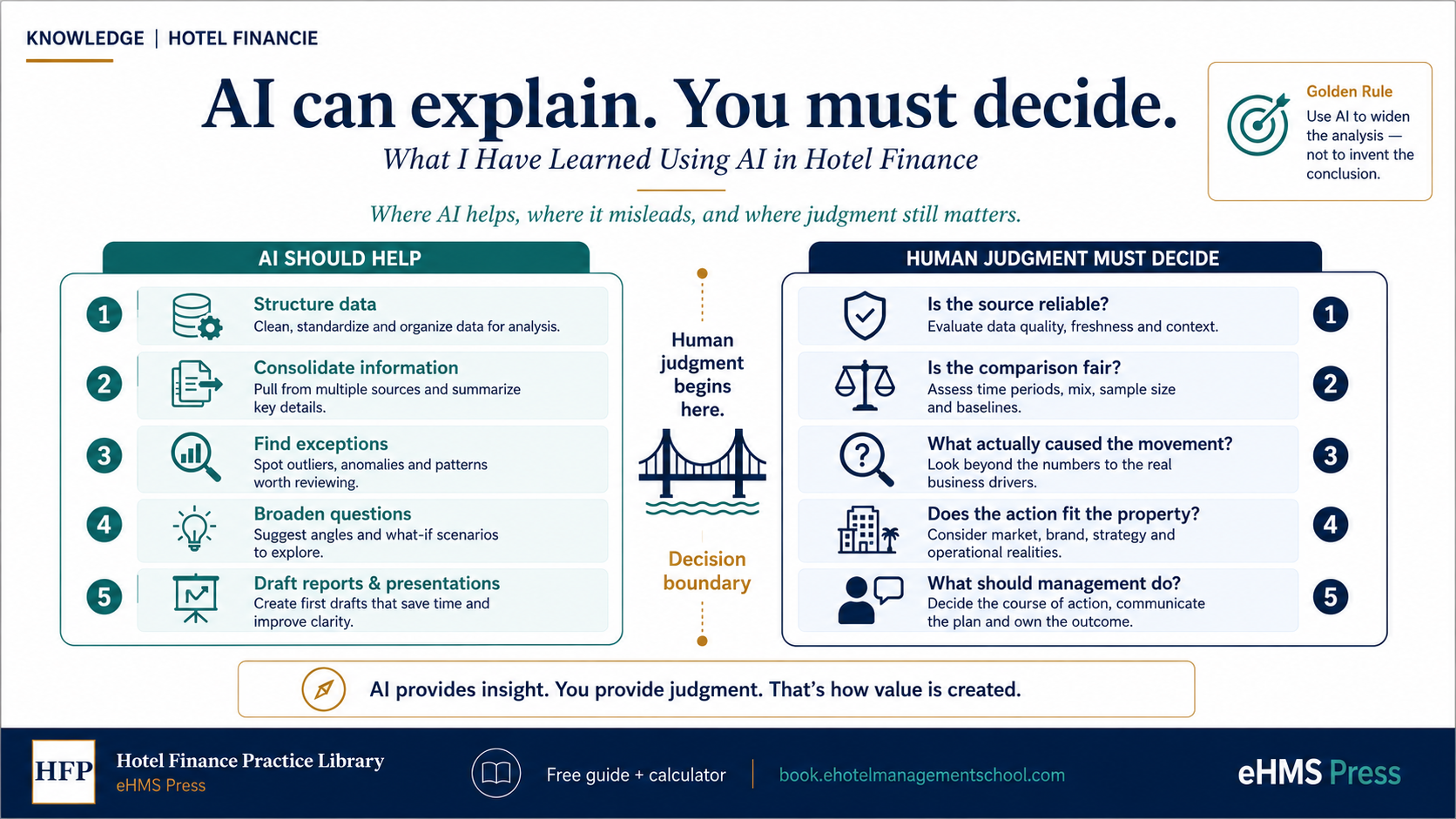
Figure 1. Where AI helps — and where human judgment begins.
Where I think AI can create the most value today
Based on our experiments so far, I am increasingly using AI in five ways.
**First, structure the information. **Clean it, classify it, organize it and prepare it for analysis.
**Second, reduce the noise. **Identify material movements, exceptions, unusual patterns and inconsistencies.
**Third, broaden the review. **Ask what a GM, owner, revenue manager, operator or auditor might question.
**Fourth, challenge my thinking. **Ask for alternative explanations and identify what information would be needed before reaching a conclusion.
**Fifth, accelerate the output. **Once I know what I want to say, AI can help structure reports, presentations, summaries and communication much faster.
Where I remain cautious is allowing AI to make the final jump from: This is what the data shows — to — This is why it happened and therefore this is what management should do.
That final jump still belongs to people who understand the property.
AI as an assistant, not the decision maker
In Hotel Financial Reporting in Practice, I use a simple line that increasingly reflects how I work with AI: AI can explain. You must decide.
The principle is straightforward. AI can help with definitions, classifications, formulas, reconciliations, exception lists, pattern identification, first drafts and scenario calculations. The professional still has to decide whether the source is reliable, whether the comparison is fair, whether the apparent relationship is causal, whether the conclusion fits the hotel and whether the proposed action is commercially and operationally sensible.
The same principle runs through the AI workflow in Hotel Budgeting and Forecasting in Practice: AI can organize evidence, identify exceptions and test consistency, but it should not invent market facts, approve assumptions or make pricing, staffing, CapEx or owner decisions.
Hotel Operations Financial Playbook takes the same discipline into operations: separate evidence from assumption, identify what actually moved first, examine the consequences and only then make the decision.
For me, that is the most realistic position on AI in hospitality today.
I do not think AI is replacing the hotel finance professional. I think it is changing where the professional should spend time.
If AI can reduce the hours we spend cleaning, consolidating, formatting, checking and searching, we can use more of our time to understand what the numbers actually mean. But we should be careful not to automate so much of the thinking process that we lose the understanding we were trying to improve.
The objective is not to let AI think instead of us. It is to use AI to help us see more, question faster and spend our judgment where it matters most.
Further reading
- Hotel Financial Reporting in Practice — How to Think With This Book: “AI Can Explain. You Must Decide.”
- Hotel Budgeting and Forecasting in Practice — AI Practice Layer and AI-assisted assumption review.
- Hotel Operations Financial Playbook — Chapter 20: Technology, Data, Automation, and Continuity. **Author note: **This article is based on the author’s own implementation experience with AI in hospitality finance, supported by the decision and control principles developed in the three eHMS hospitality-finance books listed above.